Building Customer Journeys That Convert: Multi-Channel Messaging for Modern Marketing Teams
EST Read Time: ~ 9 Mins
Today, marketers and CRM teams are not just competing on product, price, or brand alone. You’re competing on experience
In a world of infinite choice and endless advertising, the brands that win are the ones that show up at the right moment, on the right channel, with the right message, and keep showing up long after the first conversion.
This isn’t about running more campaigns. It’s about building customer journeys that actually work.
One of the biggest shifts in my own marketing career didn’t come from a new platform, channel, or campaign framework. It came from behavioural economics, diving into customer journeys and realising you’re fighting for your customers' “attention SPAN” in a sea of “attention SPAM” that your competitors are flooding their screens with. A study recently highlighted that the average human attention span has dropped from 12 seconds in 2000 to just 8 seconds today, which is even less than a goldfish's attention span of 9 seconds.1 This striking erosion emphasises how critical it is to keep your messages immediate and relevant.
This realisation fundamentally changed how I approached customer journeys:
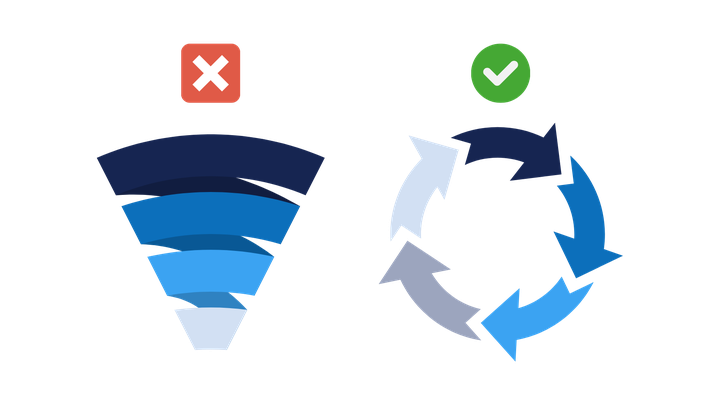
Most decisions aren’t rational, linear, or neatly funnel-shaped. They’re emotional, contextual, and heavily influenced by timing, friction, and environment.
That insight has shaped how I think about customer communication ever since.
Conversion Isn't a Click. It's a Series of Small Yeses
We often talk about "the moment of conversion" as if it's a single decision point. In reality, it's the result of multiple small reinforcements over time. Think of it as guiding your customer through a series of deliberate nudges, like clicking a sizing guide or engaging with a product demo. Each micro-commitment gradually builds towards the final conversion. Most marketing research suggests customers need 6-8 meaningful brand touchpoints before they’re ready to act, and often more in complex or high-consideration sectors like telecoms, hospitality, and retail.
Yet most brands still treat channels in isolation:
Email for marketing
SMS for alerts
WhatsApp for support
Paid media for acquisition
From a customer’s perspective, that’s not a journey. That’s noise.
High-performing brands think differently. They design connected experiences that move customers smoothly from awareness, to consideration, to purchase, to loyalty, and back again.
Why Channels Matter More Than Campaigns
Your customers don’t live in one channel. They move fluidly between apps, devices, and platforms throughout the day.
A modern customer journey might look like this:
1. They discover your brand on social or search
2. They receive a follow-up message or offer on WhatsApp or SMS
3. They get a rich, interactive update via RCS
4. They confirm a booking or delivery through two-way chat
5. They receive post-purchase support and follow-up reminders
6. They’re nudged back in at the right time to rebook, upgrade, buy again or leave a review
Each message alone is useful. Together, they form a relationship.
One of the most common mistakes I see, especially in large, multi-team organisations, is designing journeys around internal tools rather than customer behaviour. Teams often fall into the 'status quo bias,' sticking to familiar tools and processes even when they cause customer pain. This bias leads to entrenched silos, where each channel is owned separately, and the overall customer experience suffers. By recognising and addressing this bias, leaders can challenge these silos and foster a more integrated approach to customer journeys.
Email sits with marketing.
SMS sits with operations.
WhatsApp sits with support.
CRM sits somewhere in the middle.
From the customer’s point of view, none of that exists. They experience one brand, not five systems. The strongest journeys I’ve seen are the ones where channels stop being “owned” and start being orchestrated.
The Power of Nudge Marketing and Behavioural Design
If behavioural economics teaches us anything, it’s that small prompts can have outsized impact.
A reminder before an appointment reduces no-shows
A delivery update reduces inbound support calls
A post-purchase message builds reassurance and trust
A re-engagement nudge at the right moment drives repeat bookings or upgrades
These aren’t big, flashy campaigns. They’re micro-moments, and they’re often where brand perception is really formed. The most effective customer journeys don’t rely on hard sells. They rely on behavioural nudges. This is behavioural economics in action, reducing friction, increasing confidence, and guiding customers forward without overwhelming them.
And when those nudges happen in channels people actually pay attention to, the impact multiplies.
Cutting Through the Noise with Rich Messaging
Email inboxes are crowded. Paid ads are expensive. Push notifications are often disabled. But messaging channels, especially RCS and WhatsApp, are still underused by most brands. And I’ll be honest, this is where I see a real competitive gap opening up. This can create a powerful advantage if you jump on it.
Rich messaging allows you to:
Show, not just tell
Guide, not just notify
Converse, not just broadcast
If you’re using RCS or WhatsApp today, there’s a strong chance your competitors aren’t. And if you’re reading this, you’re already ahead of the curve. And in my experience, that shift alone can dramatically change how customers perceive a brand, from “another company selling to me” to “a brand that actually communicates with me.”
Standing out doesn’t always mean being louder. Sometimes it just means being more human.
Designing for Reach: Rich First, Reliable Always
Of course, not every customer will be on the same device, network, or app. That's why the most resilient journeys I've seen are built with intelligent fallback in mind. We promise that with our approach, you'll never be left uninformed. When rich channels fail, we ensure that a reliable fallback is always there to keep you in the loop. It's not just a technical safety net; it's a commitment to maintaining your trust and peace of mind by guaranteeing that your connection to us remains seamless.
A modern messaging strategy often looks like this:
1. RCS or WhatsApp as the first line of engagement for rich, branded experiences
2. SMS as a universal fallback to ensure delivery when rich channels aren’t available
This approach gives you the best of both worlds:
High-impact where possible, guaranteed reach where needed and all of this can be set up easily within MyLINK Studio.
And in sectors where customers are booking, buying, or upgrading online, the reality is simple most of your audience already has a modern smartphone and WhatsApp installed.
Two-Way Chat: Where Experience Becomes a Differentiator
One of the biggest sources of customer frustration is not knowing what’s happening.
Two-way messaging changes that dynamic completely:
Customers can ask questions instead of waiting on hold
Teams can resolve issues faster and more personally
Updates feel like conversations, not system alerts
Less strain on your CS teams and call centres.
The result?
Higher satisfaction, stronger brand perception, and better long-term loyalty.
For CRM teams, this also creates something even more valuable: data. Every interaction becomes a signal you can use to personalise the next step in the journey.
Tool used: MyLINK Connect
From First Touch to Long-Term Loyalty
One of the biggest missed opportunities in marketing is what happens after conversion.
Post-purchase updates, service messages, and support interactions often do more to shape brand loyalty than the original campaign that brought the customer in.
When those moments feel joined up, when customers can reply, ask questions, and get clarity instead of silence, trust builds quickly.
And trust, more than any promotion, is what drives repeat business and upgrades.
The best customer journeys don’t end at conversion. They loop.
A strong post-purchase experience can:
Reduce support demand
Increase trust and confidence
Drive repeat business
Turn customers into advocates
And your customers think in cycles, not funnels:
Discover > Convert > Support > Re-engage > Upgrade > Repeat >
Every message becomes part of a bigger story your brand is telling.
Making It Real and removing the friction with MyLINK Connect
Building these kinds of journeys doesn’t need to be complex or resource-heavy, because your communications strategy only matters if teams can actually execute it.
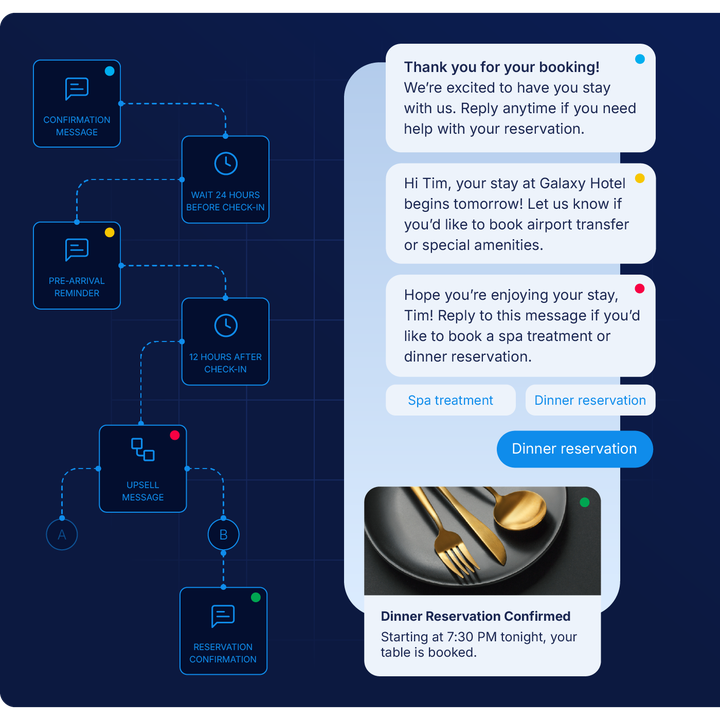
With MyLINK Studio, teams can design and deploy multi-channel messaging flows across SMS, RCS, and WhatsApp, without needing deep technical expertise. This ability to design multi-channel journeys across SMS, RCS, and WhatsApp, without heavy technical lift, is what turns these ideas from “great in theory” into “live in market.”
That means:
Faster time to value
Easier campaign and journey setup
Built-in two-way communication
Scalable experiences across markets and brands
Whether you’re running retail campaigns, managing telecoms customer lifecycles, or driving bookings in hospitality, the goal is the same: make every message feel intentional.
If You’re Curious, You’re Already Ahead
The Brands That Win Think Beyond Campaigns. The question isn’t whether your customers are seeing enough messages. It’s whether those messages feel connected. Deep diving into Behavioural Economics as a marketer will change how you see every interaction your brand has with a customer.
And once you see journeys that way, it’s hard to go back. It’s not about reinventing your marketing wheel, its just making it work better for you.
Because the brands that stand out in the 2026 and beyond won’t be the ones sending more messages.
They’ll be the ones sending better ones, at better moments, on better channels. They’ll be the ones building journeys that actually work.
https://time.com/3858309/attention-spans-goldfish/